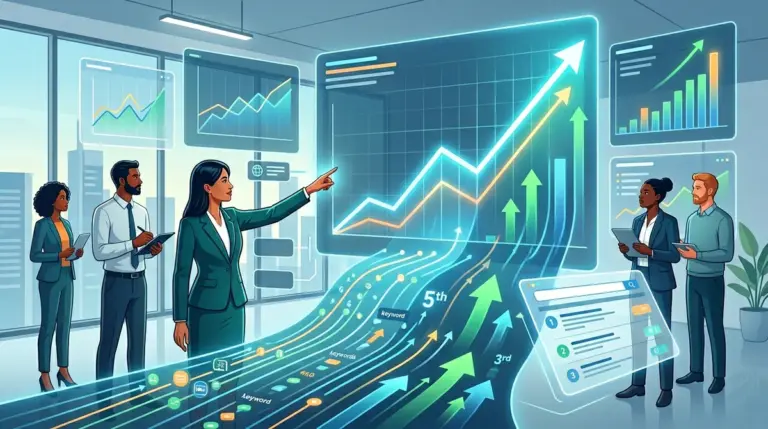
When a client or stakeholder sees a dashboard full of green arrows for keyword rankings but a flat line for revenue, the immediate reaction is skepticism. Rankings are a leading indicator, but they are not a business outcome. If you are reporting a 20% increase in top-of-page visibility without a corresponding lift in conversions, your report must shift from celebrating "wins" to diagnosing "friction." It’s critical to remember that why rankings alone never tell the full story, and you must look deeper.
The gap between visibility and conversion usually stems from three specific areas: search intent misalignment, post-click technical friction, or a breakdown in the value proposition. To maintain credibility, an SEO must report the specific data points that explain why users are arriving but not acting.
Diagnosing Search Intent Misalignment
The most common reason for rising ranks without conversions is that the keywords gaining traction are informational rather than transactional. If a site begins ranking for "how to calculate tax depreciation" but the goal is to sell "accounting software," the traffic is likely too early in the buyer’s journey to convert immediately.
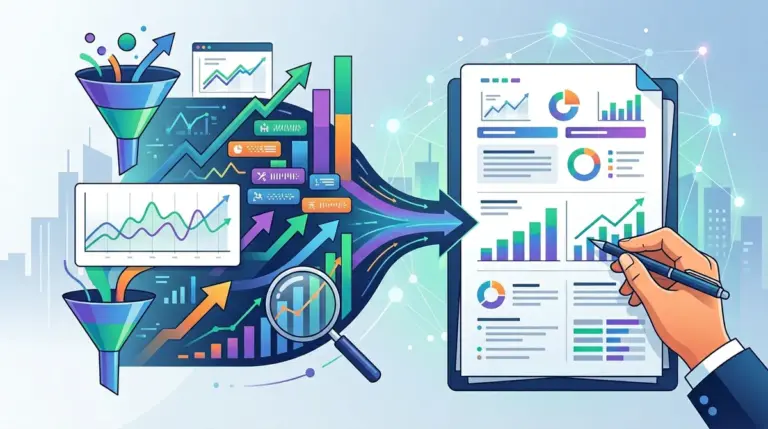
In your reporting, segment your ranking gains by intent. Use a table to show:
- Informational Keywords: High volume, low immediate conversion, high educational value.
- Commercial Investigation: Comparison terms and "best of" lists that lead to consideration.
- Transactional Keywords: High-intent terms where the user is ready to buy.
If the growth is concentrated in informational terms, report this as a "top-of-funnel awareness win." Explain that while these users aren't buying today, they are entering the brand's ecosystem. Suggest implementing micro-conversions, such as email signups or whitepaper downloads, to capture this value before they bounce.
Analyzing the Post-Click Experience
If rankings are rising for high-intent transactional terms but conversions remain low, the problem is likely the landing page. A user clicks because the SERP snippet promised a solution; they leave because the page failed to deliver it quickly or clearly.
Technical Friction and Core Web Vitals
High rankings mean Google trusts your content, but if the page takes four seconds to become interactive on a mobile device, the user will leave before the "Buy Now" button even renders. Report on Largest Contentful Paint (LCP) and Cumulative Layout Shift (CLS) for the specific pages where rankings have risen. If a page ranks #2 but has a 70% bounce rate, the technical performance is cannibalizing the SEO effort.
Conversion Rate Optimization (CRO) Gaps
Compare the ranking page’s content to the top three competitors. If your competitors offer a "One-Click Checkout" or a "Free Trial No Credit Card Required" and your page requires a 10-field contact form, the ranking is irrelevant. The user is choosing the path of least resistance. Best for identifying this: Heatmapping software or session recordings that show where users stall on the page.
Warning: Never assume a high ranking guarantees a click-through. If your meta titles are optimized for bots rather than humans, your CTR will suffer regardless of position. Always cross-reference ranking data with Search Console CTR reports to ensure the "hook" matches the "offer."
The Role of Competitive Pricing and Social Proof
SEO does not happen in a vacuum. You may have successfully optimized a page to rank #1 for a specific product, but if your price point is 15% higher than the merchant at #2, or if you have three stars compared to their five, the user will click your link, look at the price, and go back to the SERP to click your competitor.
When reporting, include a "Market Context" section. Note any recent competitor price drops, new discount codes appearing in SERP sitelinks, or a lack of trust signals (like SSL badges or customer testimonials) on your high-ranking pages. This shifts the conversation from "SEO is failing" to "The offer needs to be more competitive to capitalize on the SEO success."
Attribution Gaps and Assisted Conversions
Sometimes, conversions *are* happening, but they aren't being attributed to the organic search entry point. In a multi-touch buyer journey, a user might find the site through an organic search for a "how-to" guide, leave, and then return three days later via a direct visit or a retargeting ad to complete the purchase.
To report this accurately, move beyond "Last-Click Attribution." Use the Assisted Conversions report in GA4 to show how many users started their journey with an organic search. If organic search is contributing to the "top of the path" but not the "final click," the rankings are working, but the attribution model is hiding the ROI.
Next Steps for Realigning Performance
To bridge the gap between rankings and revenue, your next reporting cycle should focus on actionable adjustments rather than just tracking positions. Use the following checklist to guide the strategy:
- Update CTAs: Ensure the call-to-action on high-ranking informational pages matches the user's current stage (e.g., "Download the Guide" vs. "Buy Now").
- Audit Mobile Usability: Check if pop-ups or heavy images are blocking the conversion path on mobile devices.
- Refresh Meta Data: Align the search snippet with the actual offer on the page to reduce bounce rates.
- Implement Micro-Conversions: Track "Add to Cart," "Scroll Depth," or "Video Views" to prove engagement even when a sale doesn't occur.
Frequently Asked Questions
Why does my bounce rate increase when my rankings go up?
This often happens when you begin ranking for broader, high-volume terms. These users may be looking for general information rather than your specific product. If the content doesn't immediately answer their query, they will bounce. Refine the content to better match the specific intent of those new keywords.
Can high rankings actually hurt my conversion rate?
Mathematically, yes. If you rank for a massive "top of funnel" keyword, you will get a flood of low-intent traffic. While your total conversions may stay the same or rise slightly, your conversion *rate* (conversions divided by total traffic) will drop because the denominator has increased significantly.
How long should I wait for conversions to follow a ranking increase?
For B2B or high-ticket items, the sales cycle can be weeks or months. If rankings rise today, you might not see a revenue lift for 30 to 90 days. For low-cost B2C products, the lift should be visible within 7 to 14 days. If it isn't, there is likely a disconnect between the search query and the landing page offer.