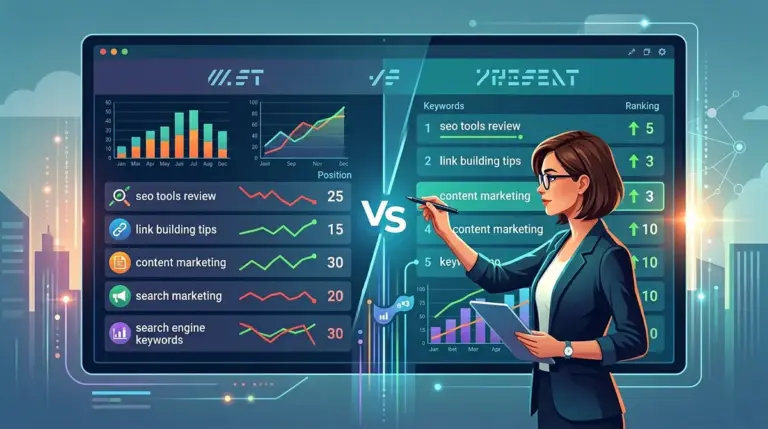
Losing a page-one ranking is significantly more expensive than maintaining one. When a URL slips from position three to position eleven, the traffic loss isn't linear—it is catastrophic, often resulting in a 90% drop in click-through rate. For agencies and site owners, the goal is to identify "at-risk" URLs while they are still in positions seven through ten, providing a window for remediation before the asset disappears into the obscurity of page two. Predictive SEO requires moving beyond static rank tracking and into the analysis of velocity, click-share erosion, and intent shifts.
Isolating Negative Velocity in Search Console
Google Search Console (GSC) is the primary diagnostic tool for identifying the "slow bleed." To find declining URLs, you must look past the aggregate site data and filter by specific pages using the "Compare" function. A standard 28-day comparison against the previous period often contains too much "noise" from seasonal trends or weekly fluctuations. Instead, compare the last three months to the previous three months to identify sustained downward trends.
Focus on the delta between Average Position and CTR. If your average position remains stable but CTR is dropping, you aren't necessarily losing the SEO war; you are losing the SERP real estate war. This usually indicates that a new SERP feature—such as a Featured Snippet, a "People Also Ask" block, or a heavy dose of Sponsored results—has pushed the organic listings further down the fold. Conversely, a steady decline in position (e.g., moving from 4.2 to 6.8 over twelve weeks) signals that a competitor has refreshed their content or gained significant backlink authority, making your URL a candidate for a "drop-off" event.
Identifying Intent Shift and SERP Feature Intrusion
Search intent is not static. Google frequently re-evaluates what a user wants when they type a specific query. If a URL that previously ranked for "best CRM software" (commercial intent) begins to drop, check if the SERP has shifted toward "how to use a CRM" (informational intent). If the top three results are now tutorials rather than listicles, your URL is declining because it no longer satisfies the primary intent.
Signs of intent misalignment:
- A sudden increase in bounce rate for that specific URL despite no changes to the page.
- Competitors with different content formats (e.g., video or tools) moving above your long-form text.
- The disappearance of your URL from "People Also Ask" or "Images" tabs while maintaining a standard blue link position.
The Impact of SERP Volatility
Using a tool like SERPs Rank Checker allows you to monitor daily fluctuations that GSC’s delayed reporting might miss. High volatility in the top ten results often precedes a major ranking shift. If you notice your URL "dancing" between positions 8 and 14, Google is testing your page's relevance against new or updated competitors. This is the critical moment to intervene with a content refresh or internal link boost.
Technical Erosion and Core Web Vital Drift
A URL can decline even if the content remains the best in its class. Technical debt accumulates over time. A common cause of page-one drop-offs is "performance drift," where a page becomes slower due to unoptimized images added by editors, new heavy scripts in the site header, or server response degradation. Since Google uses Core Web Vitals as a tie-breaker for competitive keywords, a slight dip in LCP (Largest Contentful Paint) can be the catalyst that pushes a position-nine result to position twelve.
Warning: Do not mistake a "Google Dance" or temporary algorithm testing for a permanent decline. If a URL drops five positions overnight but recovers within 48 hours, avoid making drastic changes. Aggressive editing during a temporary flux can lead to "over-optimization" penalties that turn a temporary dip into a permanent loss.
Content Decay and Information Obsolescence
Content decay is the most frequent driver of declining rankings for evergreen topics. Google’s "Freshness" algorithm favors content that reflects current data, dates, and trends. If your article on "2023 Marketing Strategies" is still live in mid-2024, its click-through rate will plummet, signaling to Google that the result is no longer relevant. This creates a feedback loop where lower CTR leads to lower rankings.
Audit your declining URLs for "Information Obsolescence." Check for:
- Outdated statistics or broken external links.
- Screenshots of software interfaces that have since been updated.
- References to defunct tools, regulations, or industry leaders.
- A lack of "Coverage Depth" compared to newer competitors who may have added sections on AI, automation, or current pricing.
Operationalizing Your Decay Detection Workflow
To prevent drop-offs, you must move from reactive fixing to proactive monitoring. Establish a monthly "At-Risk Report" that flags any URL that has dropped more than three positions in a 30-day window while still remaining on page one. These are your highest priority targets for optimization.
Start by refreshing the meta title and description to improve CTR. If the position continues to slide, conduct a gap analysis against the three competitors who recently moved above you. Often, adding 300-500 words of highly specific, updated data or adding three internal links from newer, high-authority blog posts on your site is enough to stabilize the ranking and push it back toward the top three.
Frequently Asked Questions
How long should I wait before intervening when a URL starts to drop?
Wait for a sustained trend of at least 14 to 21 days. SEO is subject to daily "noise" and data center updates. If the decline persists beyond three weeks or if you drop more than five positions in a single week, it is time to audit the page for intent shifts or technical issues.
Can internal linking alone save a declining URL?
In many cases, yes. If a URL is declining because its "link equity" has been diluted by newer content, adding three to five contextual internal links from your site's highest-authority pages can signal to Google that the page is still a priority. This is often faster and more effective than waiting for new external backlinks.
Does a drop in CTR always mean I will lose my ranking?
Not immediately, but it is a leading indicator. Google uses engagement signals to validate its rankings. If users consistently skip your result for the one below it, Google will eventually swap their positions. A dropping CTR is an early warning that your title tag or snippet is no longer competitive.
What is the fastest way to stop a ranking slide?
The fastest intervention is usually a "Freshness Update." Update the publication date, refresh the first two paragraphs with current information, and fix any broken outbound links. This signals to the crawler that the page has been maintained, often resulting in a temporary "re-indexing boost" that can stabilize the position.