

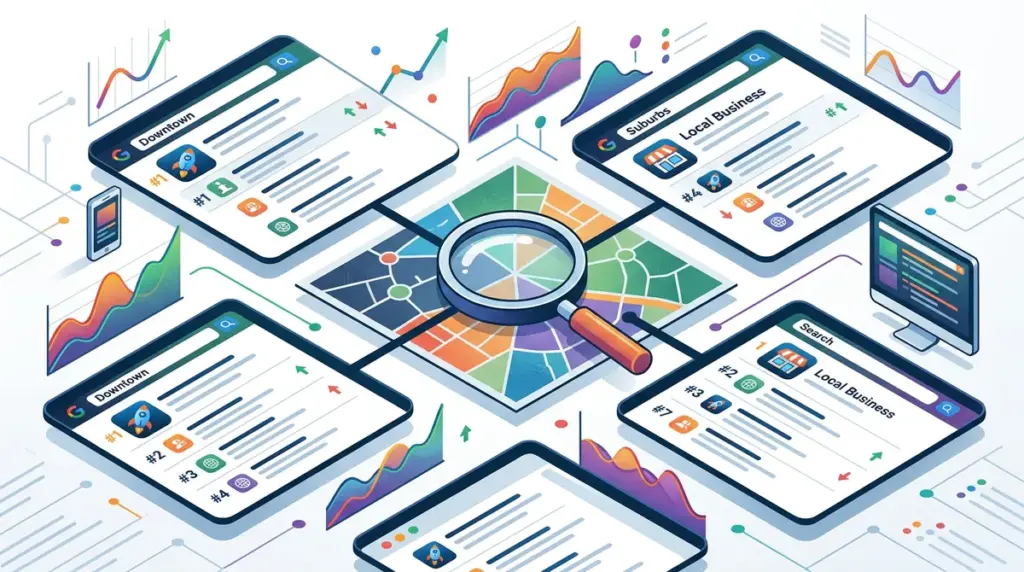
Monitoring search rankings from a central office or a single IP address often produces a distorted view of a brand's actual performance. For businesses with physical locations or localized service areas, a "national" ranking is a vanity metric that obscures the reality of the user experience. Google’s transition toward hyper-local results means that searchers 50 miles apart—or even five blocks apart—will see entirely different SERP layouts, competitor sets, and organic positions.
The Displacement Effect of the Local Pack
The most immediate way local search alters your true position is through the "Local Pack" or "Map Pack." This feature typically occupies the top of the SERP for any query Google identifies as having local intent. If your site ranks #1 organically but fails to appear in the Local Pack for a "near me" query, your "true" position is effectively #4 or #5, buried beneath three map listings and potentially a row of sponsored advertisements. To truly gauge your visibility, you need to track map pack and organic rankings together consistently.
This displacement is not uniform. For high-intent commercial queries, Google may insert a "Local Teaser" which includes reviews, photos, and price points. This rich content draws the eye away from traditional blue links. If you are tracking rankings based on a national average, you are likely overestimating your click-through rate (CTR) by ignoring the visual gravity of these local features.
Coordinate-Level Tracking vs. Regional Averages
Standard rank tracking often relies on city-level or zip-code-level data. However, Google’s algorithm uses precise geolocation—often down to the neighborhood or street level—especially on mobile devices. A search for "commercial HVAC repair" conducted in a downtown business district will prioritize different service providers than the same search conducted in a suburban industrial park ten minutes away.
- The Centroid Bias: Historically, rankings were strongest near the "city center" or centroid. Modern local search now prioritizes the proximity of the user to the business location, meaning your rank fluctuates as the user moves.
- Service Area Overlap: For service-based businesses (SABs) without a storefront, your ranking "truth" depends on how Google draws your service boundary relative to your competitors' verified addresses.
- IP vs. GPS: Desktop rankings usually rely on IP addresses, which are notoriously imprecise. Mobile rankings use GPS and Wi-Fi triangulation, providing a much narrower and more competitive field of results.
Warning: Relying on "incognito mode" from your desktop to check local rankings is fundamentally flawed. Google still uses your ISP’s location and your browser’s cache of previous searches to influence the results, often showing you a "cached" version of local relevance that doesn't reflect what a new customer sees.
How Search Intent Reclassifies Your Competitors
In a broad national search, your competitors are other large-scale websites or publishers. In a local search, your competitors change to include small, hyper-focused local businesses and directory sites like Yelp, TripAdvisor, or Angi. Your true ranking position is relative to these local players who may have significantly higher "Local Authority" despite having lower "Domain Authority."
Google’s "Possum" update and subsequent refinements have made it so that businesses located just outside city limits may be filtered out of results entirely if a similar business is located closer to the searcher. This means your true position could drop from #2 to "not in top 100" simply by crossing a municipal border. Accurate reporting requires tracking at the specific latitude and longitude of your target demographics to capture these shifts.
The Impact of the "Near Me" Query Expansion
The rise of "near me" and "open now" filters has fundamentally changed how rankings are calculated. These queries trigger a different set of ranking signals, prioritizing real-time data over historical SEO strength. If your Google Business Profile (GBP) indicates you are closed, your organic ranking might remain high, but your visibility in the Local Pack—the place where the conversion happens—will vanish.
Best for: Multi-location brands and franchises that need to understand which specific branches are underperforming in their immediate 5-mile radius, rather than looking at aggregate state-level data.
Hyper-Local Ranking Strategy Implementation
To move beyond misleading averages, SEO professionals must shift their measurement framework. This involves segmenting data by intent and geography. If a keyword triggers a map pack 80% of the time, your organic rank is a secondary KPI; your map position is the primary driver of revenue. You must audit your "true" position by simulating searches from specific high-value coordinates where your customers actually live and work.
Stop reporting on "National Rank" for keywords with local intent. Instead, report on "Share of Voice" within specific zip codes. This provides a more granular and honest look at how much of the market you actually control. Use tools that allow for GPS-coordinate spoofing to see the SERP exactly as a local user does, including the local ads and "People Also Ask" boxes that vary by region.
Local Ranking FAQ
Does a high organic rank guarantee a spot in the Local Pack?
No. While organic signals influence local rankings, the Local Pack relies heavily on proximity, relevance, and prominence (reviews and citations). You can be #1 organically and not appear in the Map Pack at all if your business is too far from the searcher.
How often do local rankings change?
Local rankings are more volatile than national rankings. They can change based on the time of day (business hours), the searcher's physical movement, and even real-time traffic patterns in some high-density urban areas.
Why does my rank look different on mobile versus desktop?
Mobile searches use more precise location data (GPS) and often prioritize "near me" results and click-to-call buttons. Desktop searches are broader and may show more traditional organic results because the user's intent is often perceived as research-based rather than immediate action-based.